 KO · ENKO · EN
AgUni turns agricultural production — exposed to climate and season — into infrastructure that can be planned, operated and proven. AgDome creates the growing environment; AgOS standardizes its operation. As contracts and data accumulate, one production site becomes infrastructure the next investment can build on.Climate-adaptive agricultural infrastructure, with an operating system for repeatable production.
The problem
Corporate raw-material demand and urban food demand don't wait for a harvest. Whether it's a functional, high-value crop or everyday produce, the question is not how much can be grown but whether the promised quantity and quality can be delivered when needed.
Heat waves, cold snaps, drought, pollution and water scarcity translate directly into production loss, higher operating cost and asset damage — in open fields and in conventional protected horticulture alike. In agriculture, climate risk is operating risk, and it has to be managed inside the production system.
Even when agriculture performs, it rarely leaves records that finance can read. Only when production cash flow and operating risk can be continuously proven does longer capital come in.
What we build
Reduce external variables, make operation repeatable, and leave the result as evidence.
Reduces the influence of outside climate and contamination, and controls the conditions for large-scale production inside one standard unit.
Environment, energy, growth, production and equipment data managed in one system. Repeated field experience becomes SOP; SOP becomes the baseline for the next AgDome.
Production contracts, operating performance, resource use and verifiable data connected. This is why we build a structure that can be constructed and operated repeatedly — not one good facility.
Operating reference
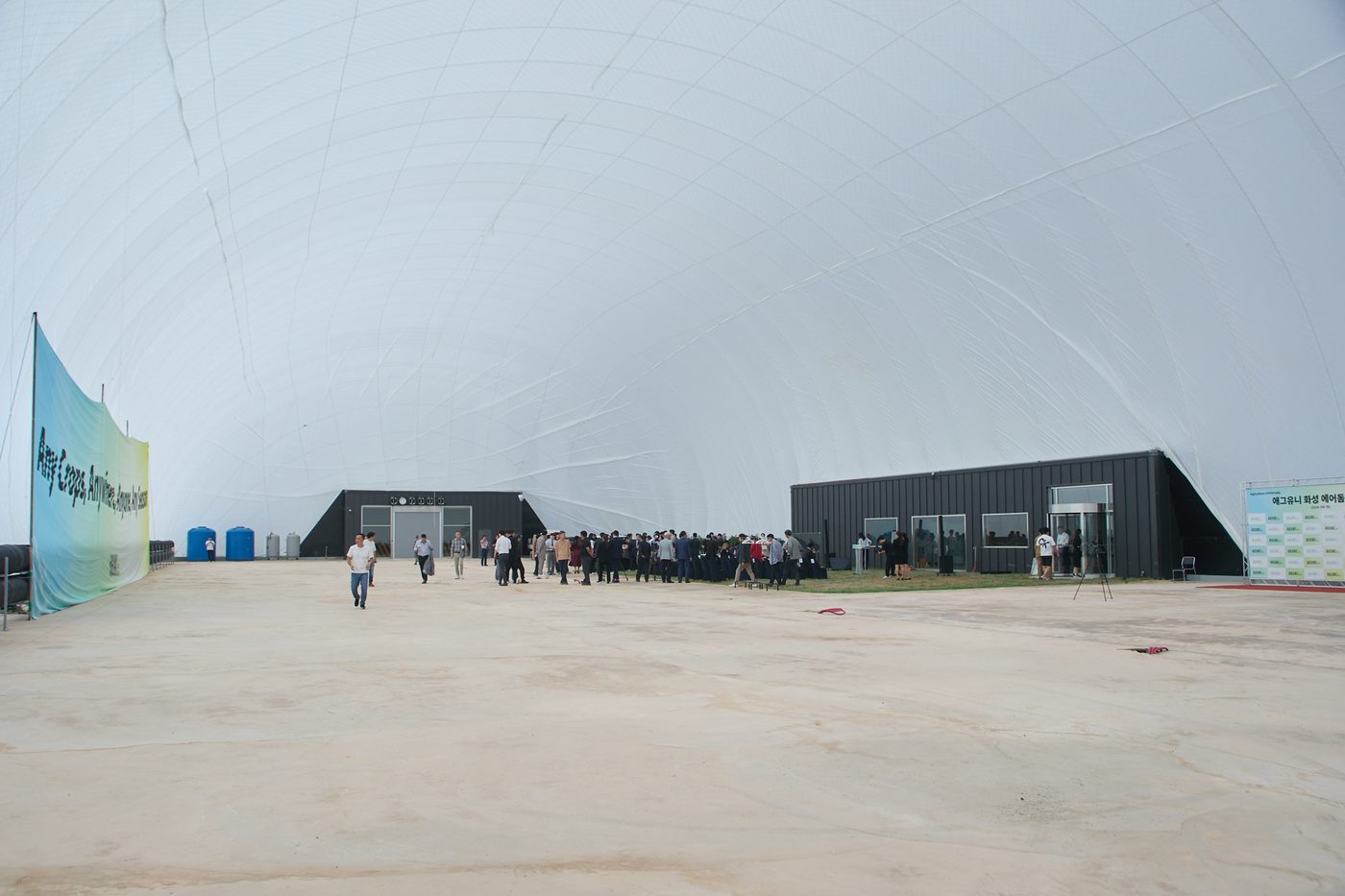
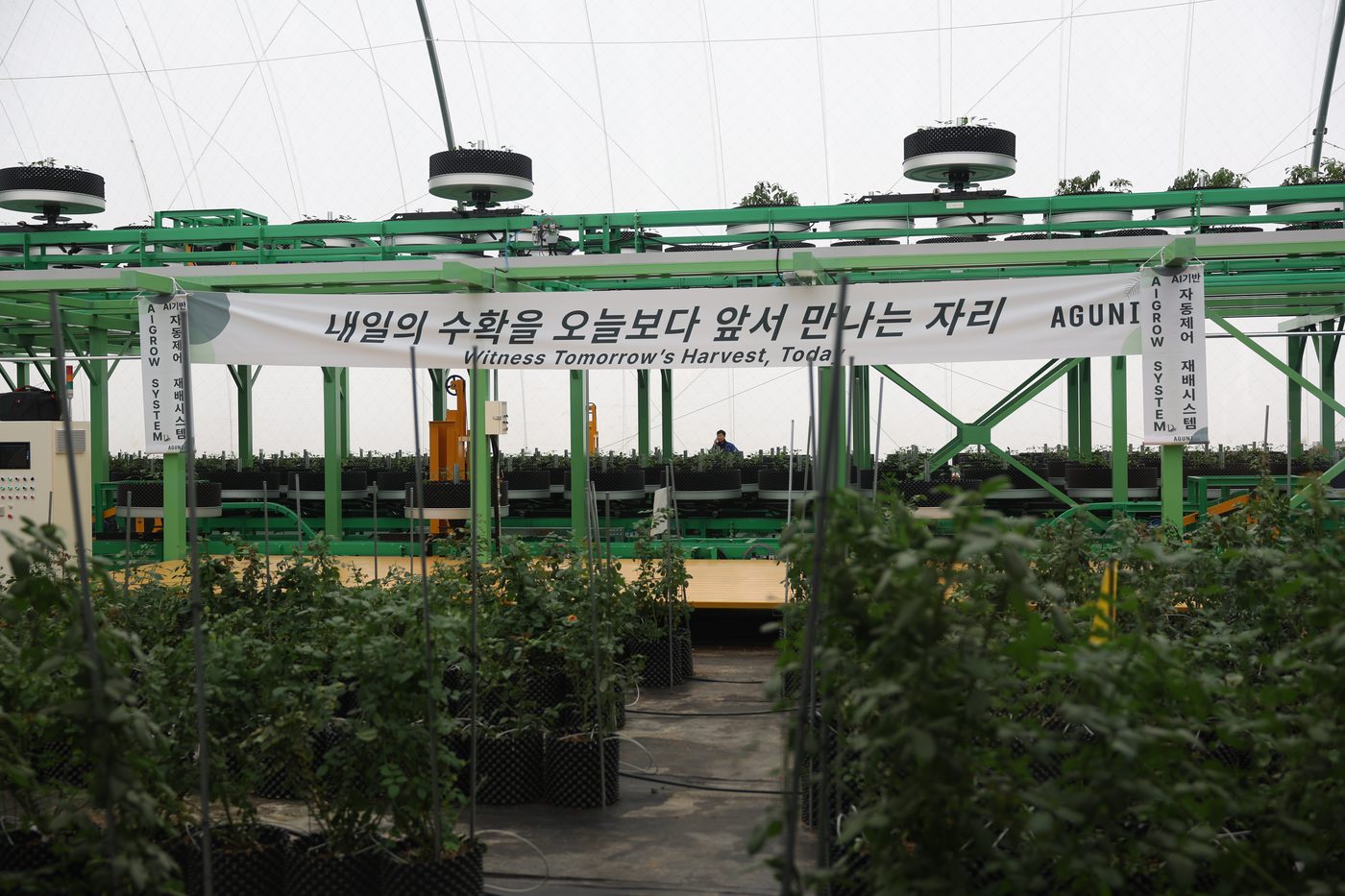
AgUni Valley in Hwaseong is an operating reference we built ourselves. Beyond a single AgDome (3,300 m²), we established a complete, one-stop 16,500 m² infrastructure — production domes, energy and control systems — and validated it through real production. The CAPEX and OPEX, environmental control, quality, energy, maintenance and production data accumulated here form AgUni's first benchmark. In the next region, this validated model is replicated as is.
Recognition & Affiliations
International
 World Economic Forum
 UNCCD COP17
 APEC
APEC ADB · IFAD Symposium
 ASEAN+3 Forum
 KOICA · Nepal Program
Government & Programs
 농림축산식품부 A-Ventures
 TIPS
TIPS 신용보증기금 Nest
 COMEUP
 Austria GIN
 Korea Frontier 2026
Standards
 ISO 9001 · 14001 · 45001
 벤처기업
벤처기업 기업부설연구소
 여성기업
여성기업How we work
From cultivation to quality, delivery and traceability, operated to contract specification.
Roses, Harucho (functional chili), purslane, chrysanthemum, centella, wasabi, aralia shoots and medical cannabis — crops we have grown ourselves at AgUni Valley set the baseline for contract production.
Beyond buying produce: a relationship in which the raw material you need is designed together and produced continuously.
Year-round contract production →Land, facility, operation and capital are allocated to fit the project.
AgUni provides the production infrastructure and operating system, and designs the structure that creates long-term recurring operating income.
Land · investment discussion →Food-security and climate-adaptation projects designed with operating income and performance data, so they do not end as one-off construction or grants.
Public capital lowers initial risk; real operating results then bring in private capital.
Government · institutional partnership →Production facility, contracts, operating and verification data connected — so agricultural infrastructure becomes a unit that can be identified and valued.
Through rights structures tied to real production and cash flow, we build the long-term possibility of a new agricultural infrastructure finance.
Investor · IR inquiry →Why it repeats
Infrastructure creates operation; operation creates contracts and evidence; evidence calls impact and capital; capital becomes the next infrastructure. This is why AgUni designs a repeatable structure, not a single facility.
Impact
In national and regional projects, what matters is not only how many units were built. It is whether food supply became more stable, how efficiently water and energy were used, what jobs and capacity remained in the region — and whether the next investor can trust those results.
AgUni does not explain these results after a project ends. From the start, we design what will change, to whom value flows, and how it will be proven.
Global
Desert, tropics and extreme cold are different conditions. AgUni localizes the infrastructure to each region's climate, energy, water, regulation and supply chain — and manages operation, quality and data as one standard through AgOS.
Insights
Repeatable evidence matters more than specifications. We record what we learn while building and operating real projects.
First records are being prepared.